

Firefighters Training School Reviews 2025: From Achievements to Ambitious Future Goal
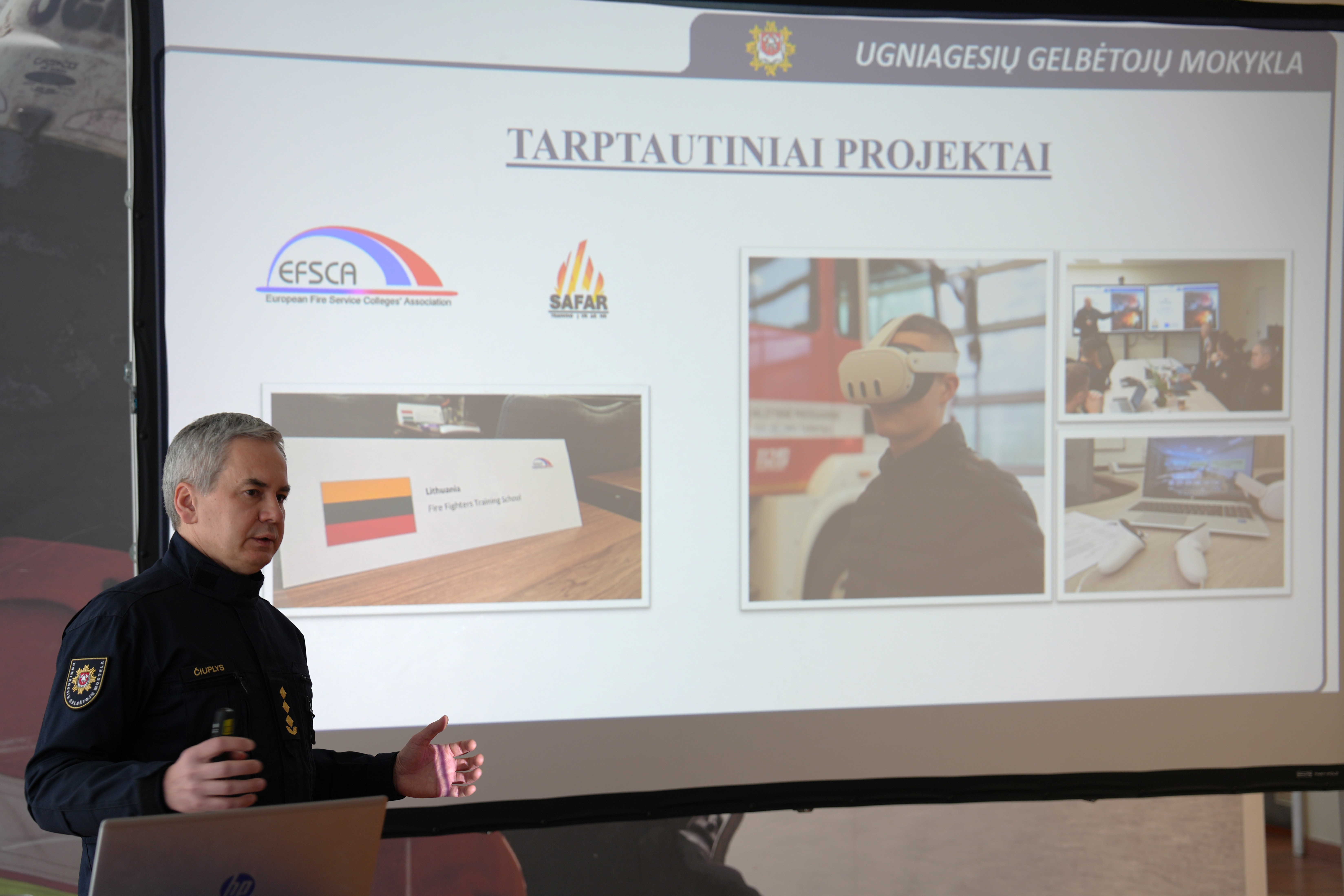
On February 12, 2026, the Firefighters Training School (FTS) held an annual community gathering to discuss the activity results of 2025. The event brought together many high-ranking officers and partners, emphasizing the importance of cooperation in strengthening national security.
Honorable Guests and the Power of Partnership
The leadership of the Fire and Rescue Department (PAGD) attended the event: Director General Renatas Požėla, Deputy Directors Colonels Kęstutis Agintas and Saulius Tamulevičius, and Advisor Colonel Donatas Gurevičius.
The integration of the School into the general officer training system was demonstrated by guests from other training institutions:
- Deividas Kaminskas (Border Guard School);
- Saulius Greičius (Lithuanian Police School);
- Ieva Vizgirdienė (Customs Training Center);
- Nerijus Sujeta (Competence Development Board of the Lithuanian Prison Service).
Representatives from the "Aras" anti-terrorist unit, the Riflemen's Union, the Emergency Response Center (BPC), VGTU, and other institutions also actively participated in the discussions, highlighting the need for inter-institutional cooperation.
Highlight – The International SAFAR Project
A key part of the presentation focused on the School's project activities, with the SAFAR project standing out as the most significant.
What is SAFAR?
SAFAR (Situational Awareness Training of Firefighters within an Immersive XR Training Site) is an international "Erasmus+" project designed to modernize firefighter training using Extended Reality (XR) technologies.
Why is it Important for the School?
The essence of this project is to move away from textbook learning and instead "immerse" future officers in virtual, yet stunningly realistic, dangerous situations.
Main Objectives of the Project:
- Implementation of XR Technologies: Creating Virtual Reality (VR), Augmented Reality (AR), and 360° video scenarios to safely simulate fires, chemical accidents, or other crises.
- Developing Situational Awareness: Teaching how to quickly and correctly assess the environment under chaotic and dangerous conditions.
- Reducing Risks and Costs: Virtual training prevents real injuries during exercises and saves resources (such as fuel and extinguishing agents).
- Methodological Material: Preparing a special guide for educators on how to integrate these innovations into the daily teaching process.
The Result:
Firefighters trained under the SAFAR methodology will be able to make decisions faster in critical situations because they will have already "experienced" them in virtual space.
Last updated: 12-02-2026
Related news:
The first SAFE FIREFIGHTER project newsletter!
SAFE FIREFIGHTER international training in the Czech Republic
An international Erasmus+ project “SAFAR” partners’ meeting took place in Žilina, Slovakia
Pardubice hosts the first meeting of the SAFE FIREFIGHTER international project