

The birth of the SAFAR ladder truck scenario
Firefighter training is entering a new era. The SAFAR project, aiming to revolutionize professional instruction, introduces a Virtual Reality (VR) scenario for operating aerial ladders. This is not just a video it is the result of meticulous, technically complex, and patient work that allows future rescuers to learn in an environment where mistakes cost nothing.
Behind the Scenes
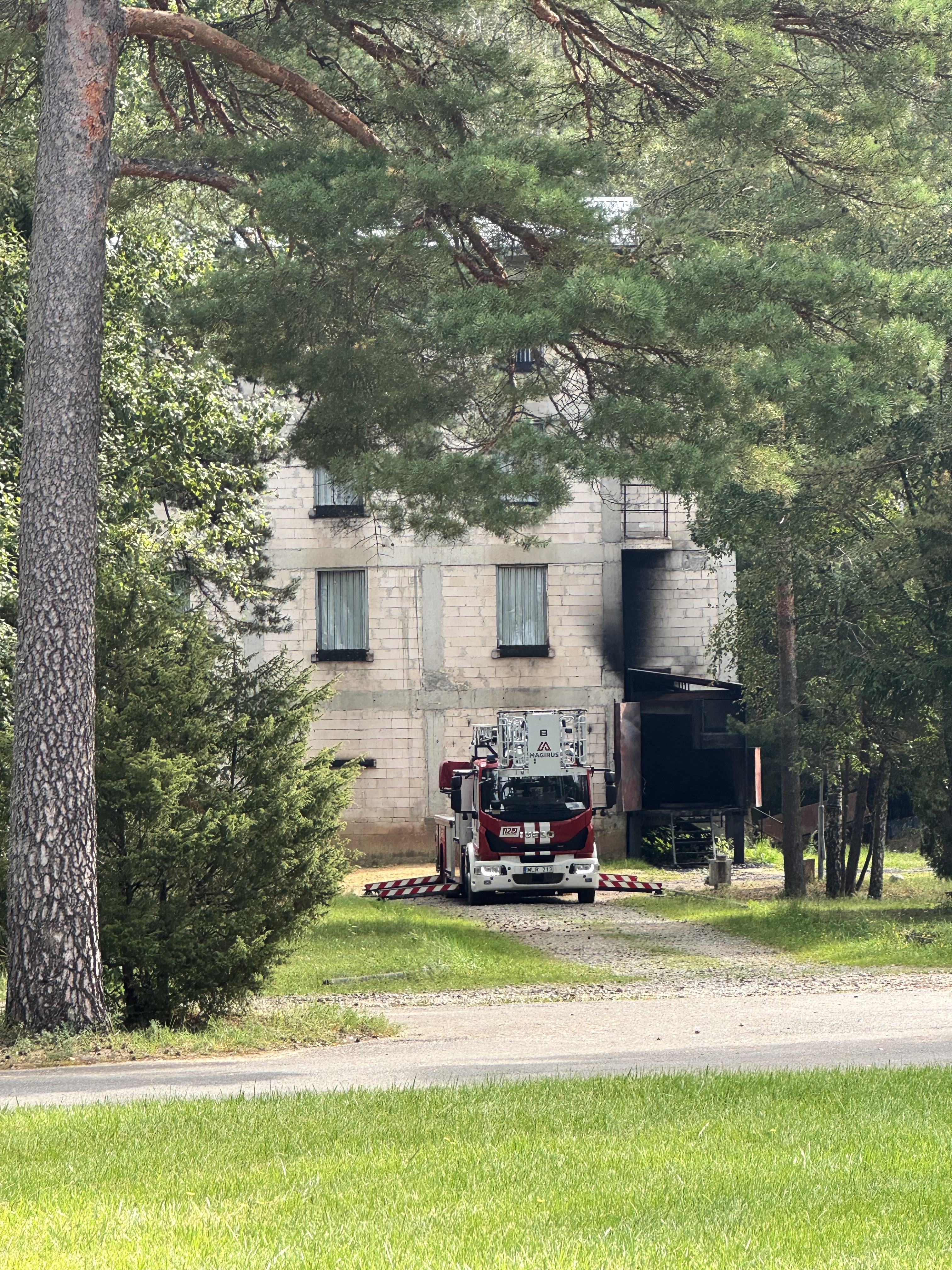
Filming began back in the spring. It was simply impossible to capture everything in a single day, which required several weeks of repeated trips to the training grounds.
One of the greatest hurdles was the unpredictable Lithuanian weather. Since visual consistency is crucial for a seamless training scenario, lighting and conditions could not differ drastically between shots. Matching identical weather conditions in a country where bright sunshine can instantly turn into heavy cloud cover or rain proved to be an incredibly difficult task, requiring constant planning and flexibility.
The team had an ambitious goal: to provide cadets with the exact view seen by an experienced operator or a rescuer in the cage. To make the experience as realistic as possible, GoPro cameras were used to film from various angles, capturing every lever movement and ladder rotation. In addition to video footage, the same cameras were used to take panoramic photos. These enabled the creation of a spherical environment, allowing the trainee to turn their head and observe the entire training ground in a full 360-degree view.
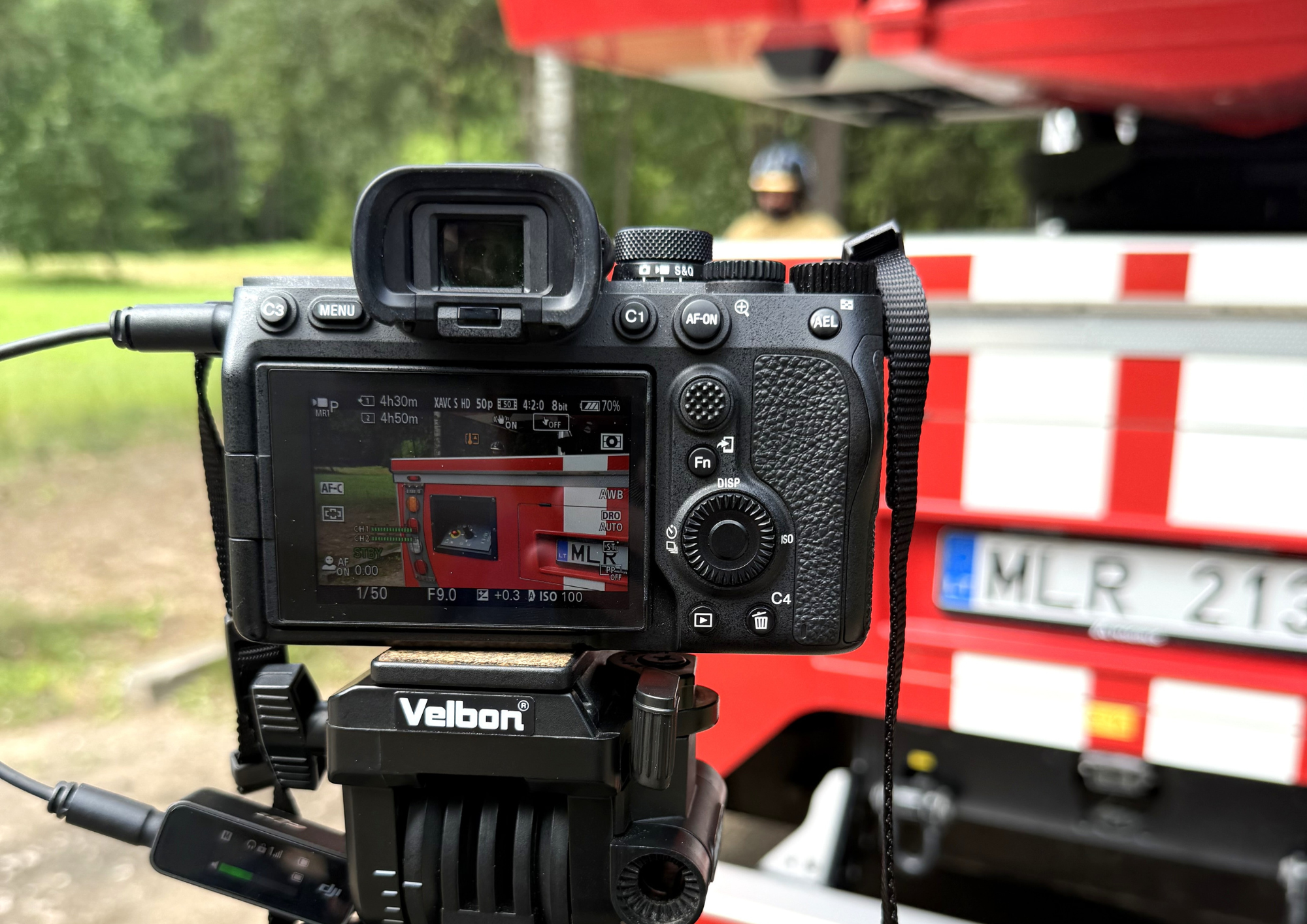
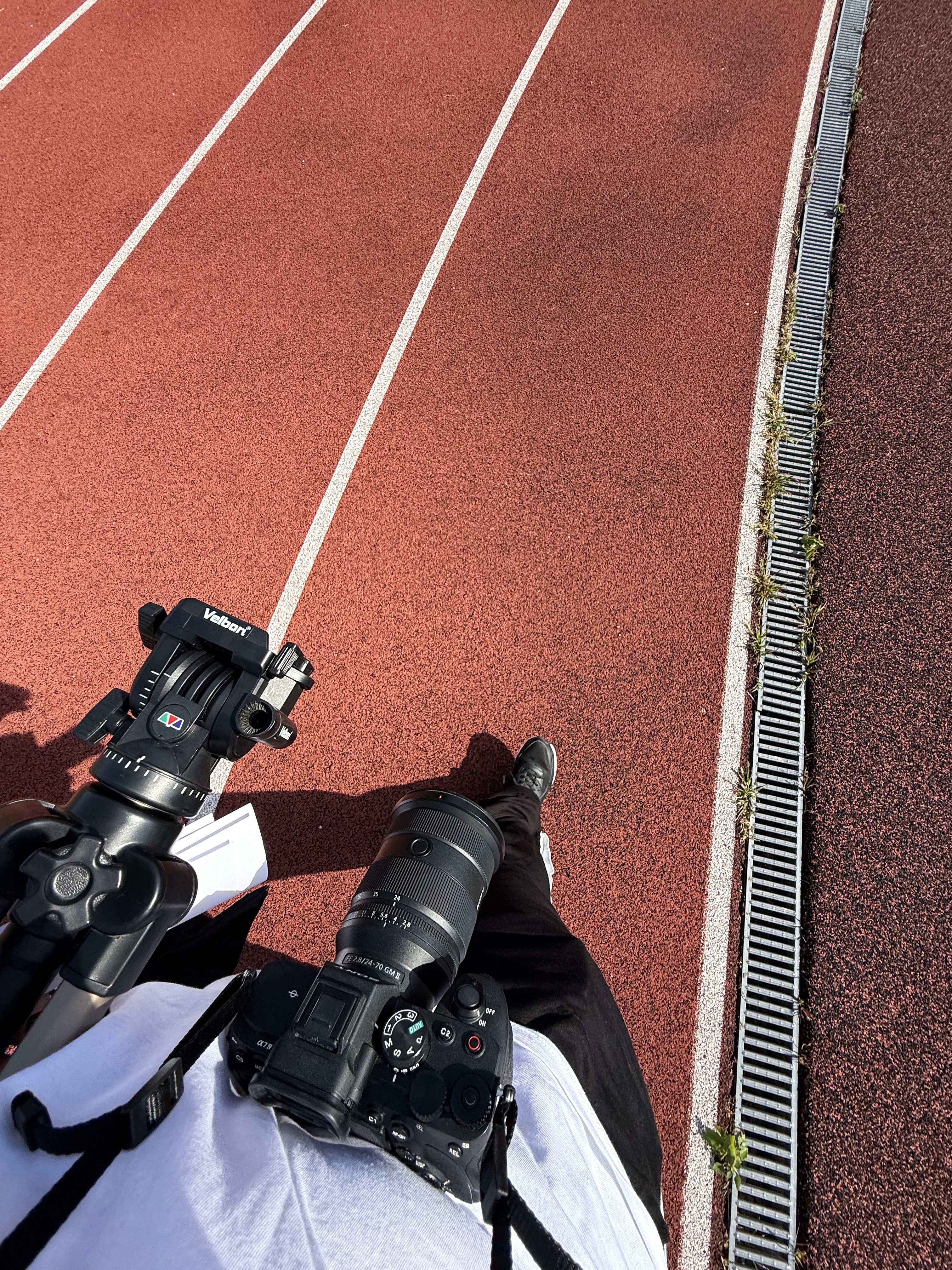
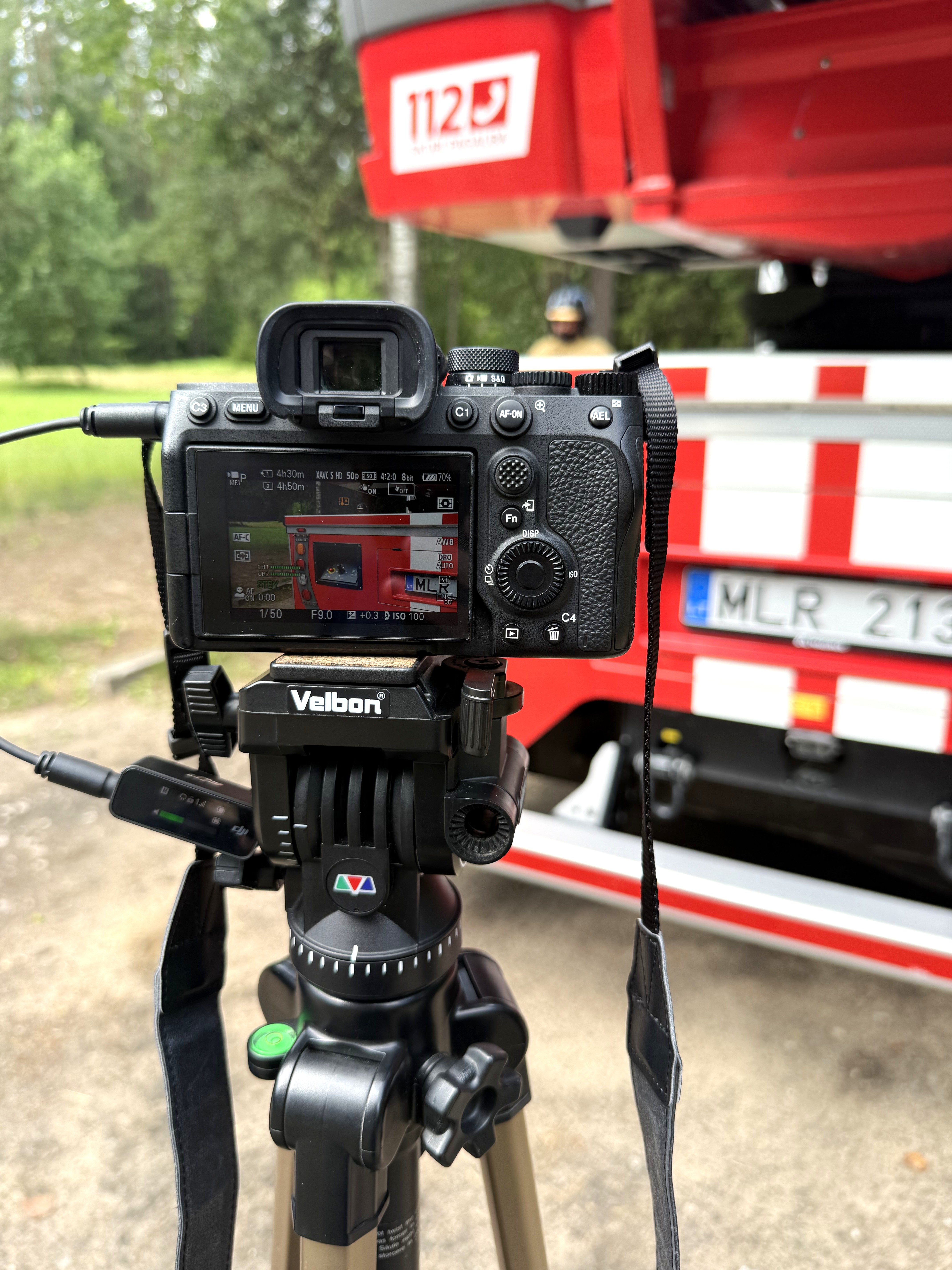
The core instructional material, focusing on the operator’s station and actions within the rescue cage, was captured using a high-resolution Sony camera. This ensured that every detail on the control panel remained crystal clear.
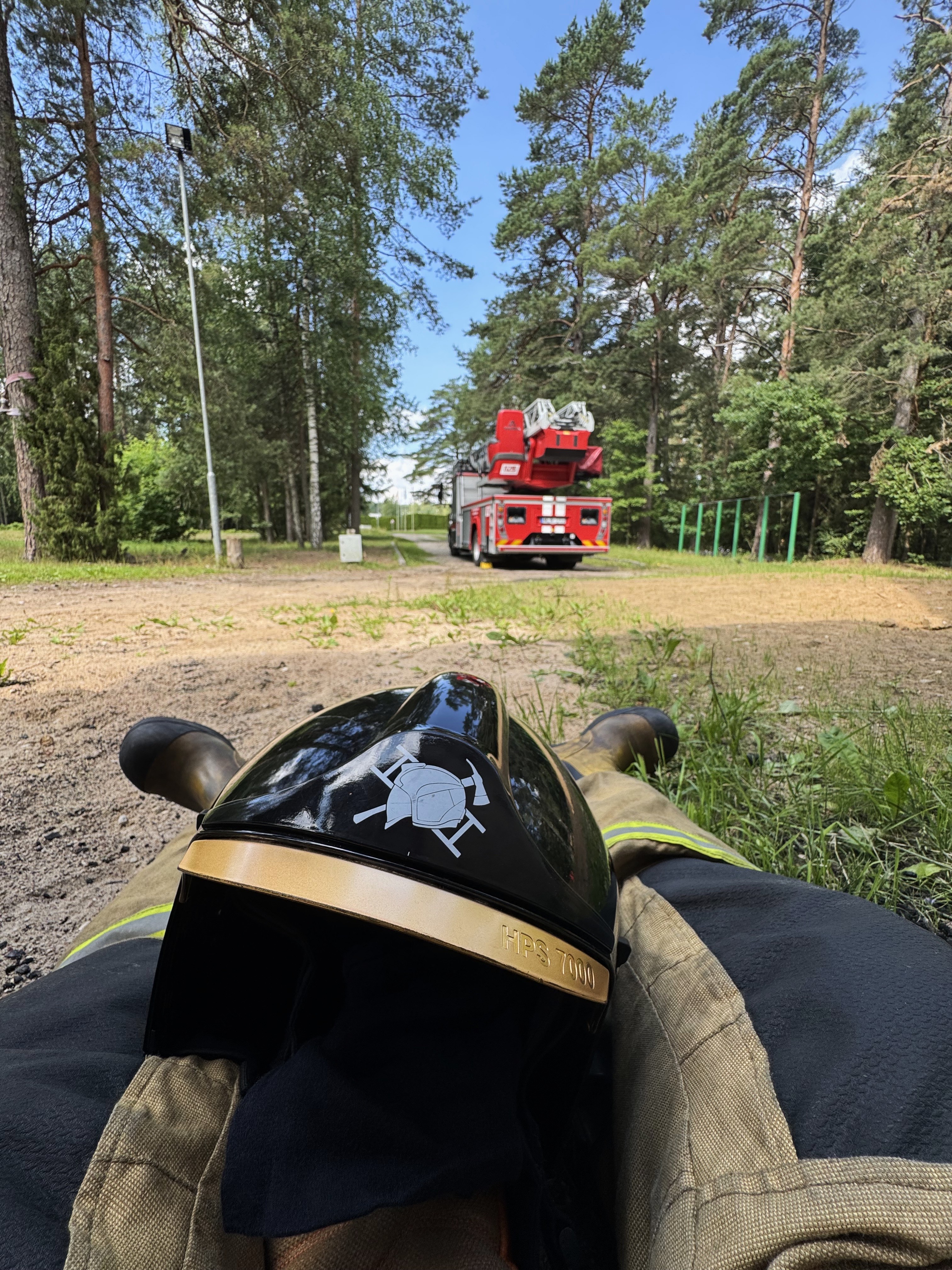
Overcoming the Heat. The process was far from easy. As the summer heat arrived, it wasn’t just the firefighting equipment that heated up on the training ground—the filming gear did too.
“There were moments when we had to stop everything. The cameras would simply shut down due to direct sunlight and extreme heat. We had to wait, cool the equipment down, and reshoot the same scenes until we achieved the perfect result,” the working group recalls.
The Result. Truly Immersive Training.
Despite all the challenges, the final product has become a powerful tool for future firefighters.
Why is it effective?
- Independence. The cadet can study alone without constant instructor supervision, memorizing equipment names and functions at their own pace.
- Structure. The videos are programmed to lead the student by the hand: showing exactly where to begin the deployment and how to complete the operation safely.
- Interactivity. This is not passive viewing. Integrated illustrations and test questions keep the participant engaged and require them to constantly verify their knowledge.
Why is this important for the SAFAR project?
This aerial ladder scenario proves that VR technology is indispensable where operating real machinery is expensive and the risk of error is high. The SAFAR project demonstrates once again that modern technology combined with determination can create tools that truly save lives—starting with high-quality officer training right from the classroom bench.
Last updated: 07-04-2026
Related news:
The first SAFE FIREFIGHTER project newsletter!
SAFE FIREFIGHTER international training in the Czech Republic
An international Erasmus+ project “SAFAR” partners’ meeting took place in Žilina, Slovakia
Pardubice hosts the first meeting of the SAFE FIREFIGHTER international project